


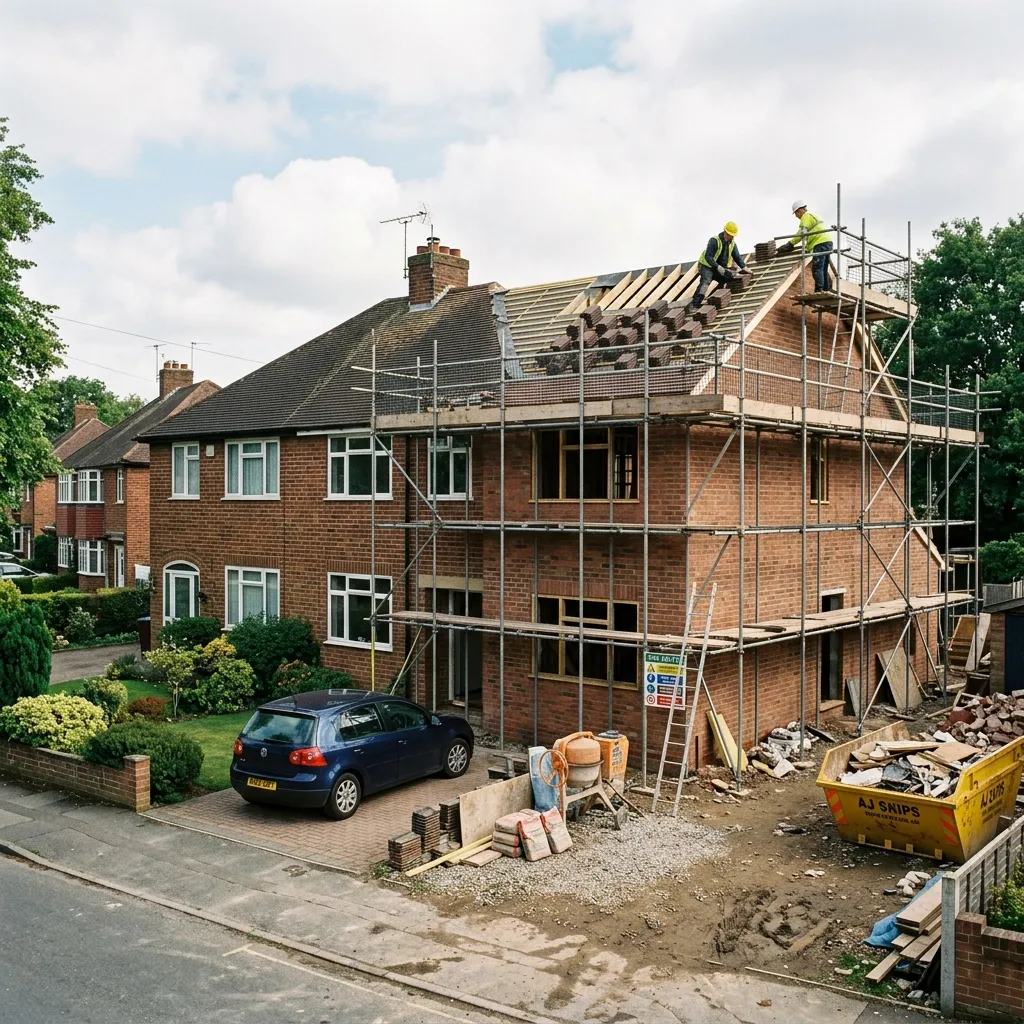
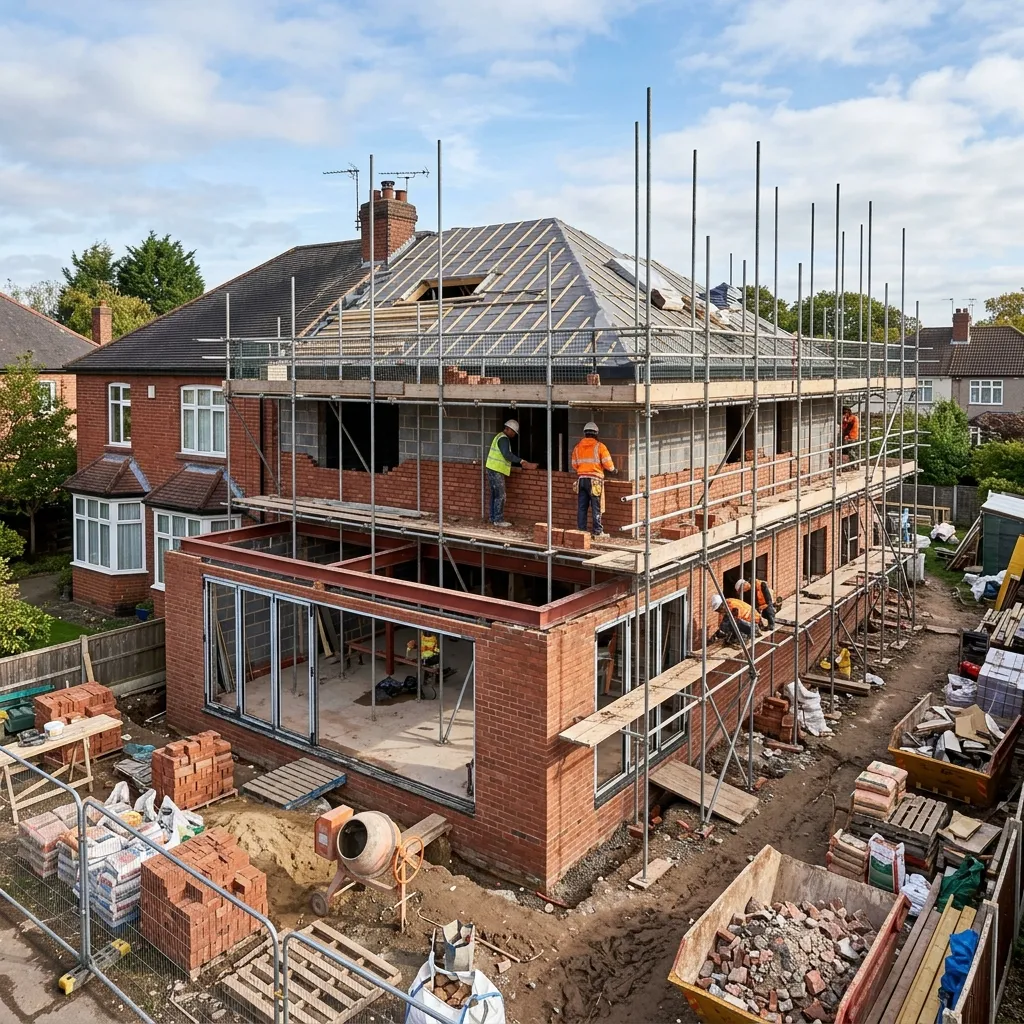
Caerphilly's mix of housing gives extensions huge potential: the 1930s semis with generous side gardens are ideal for double-storey side extensions, the valley terraces suit full-width rear kitchen extensions, and the newer estates often have corner plots crying out for a wrap-around. We build across the whole borough — Caerphilly town, Bedwas, Llanbradach, Ystrad Mynach and beyond.
Planning here goes through Caerphilly County Borough Council, and we manage the whole application for you — drawings, submissions and building control sign-off. Many single-storey rear extensions fall under permitted development, which we'll confirm before you spend a penny on plans. See our work in Caerphilly or all our extension services.
That strip of grass beside a 1930s semi is the cheapest building plot you'll ever own. A double-storey side extension can add a garage, a bedroom and an en-suite — often adding more value than it costs.
The best-value move for Caerphilly's semi-detached homes: build sideways over the drive or garden strip and gain two floors of space for one roof and one set of foundations.
Corner plots and L-shaped gardens on the borough's newer estates suit a wrap-around — combining rear and side extensions into one big open-plan family space.
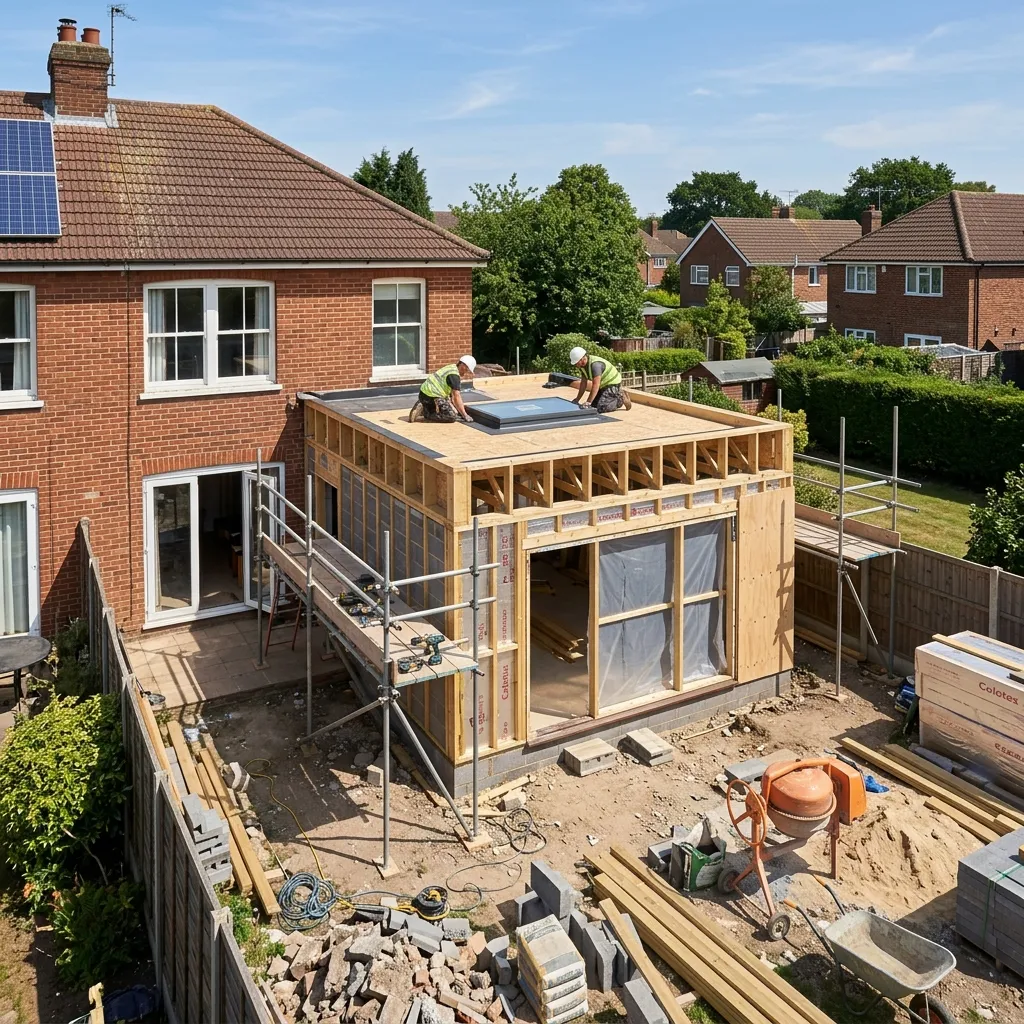
On valley terraces, a full-width rear extension replaces the cramped galley kitchen and outrigger with one wide, light kitchen-diner running the width of the house.
Our reviews are published on Google, where you can read them in full and check they are genuine.
Tell us the address and roughly what you have in mind, and we will come and look before we talk numbers. Ground conditions, drainage runs and access for machinery are what move an extension price — and none of them can be judged from a form.
11a Royal Buildings, Stanwell Road
Penarth, CF64 3ED
info@allaspectsconstruction.co.uk
02920 036 677
Nick (Direct): 07519 377053
Our extension cost estimator gives an indicative range in about thirty seconds, with nothing to fill in.
Caerphilly extensions differ from coastal ones for two reasons that have nothing to do with design: much of the borough is on the old coalfield, and a great deal of it is on a slope. Neither stops a project. Both belong in the programme at week one.
Start with the myth, because it costs people money. Much of the borough falls inside a Development High Risk Area, where most planning applications require a Coal Mining Risk Assessment. Householder development is exempt. An extension or a loft conversion is exempt by type of application, high risk area or not.
Two different questions get muddled constantly. Planning does not ask a homeowner for a mining risk assessment. The permit is about physically disturbing old workings, and it is the one with a lead time worth planning around.
What is real is the separate permit. If the ground works would disturb coal seams, abandoned workings or a mine entry — piling, deep trenching, drilling, grouting — the Mining Remediation Authority (the renamed Coal Authority) must permit it, and a standard application takes 20 or more working days. That is a genuine month, and it is the most common reason a Caerphilly build slips.
Level changes across a plot drive retaining structures, longer drainage runs and access arrangements. All three are foundation-stage decisions. A price built on a flat-site assumption and adjusted later is not a quote, and we would rather survey the levels before putting a number on it.
No. Householder development is exempt by type of application, even inside a Development High Risk Area. The requirement applies to most other kinds of planning application, which is why so much online guidance reads as though it applies to everyone.
Possibly a permit from the Mining Remediation Authority, but only if the ground works would enter or disturb coal seams, abandoned workings or a mine entry — piling, drilling, deep trenching or grouting. Standard applications take 20 or more working days, so it belongs in the programme from the start.
It moves cost towards retaining, drainage and access rather than automatically increasing the total. What it does mean is that a flat-site quote is meaningless on a hillside plot — we survey levels before pricing.