


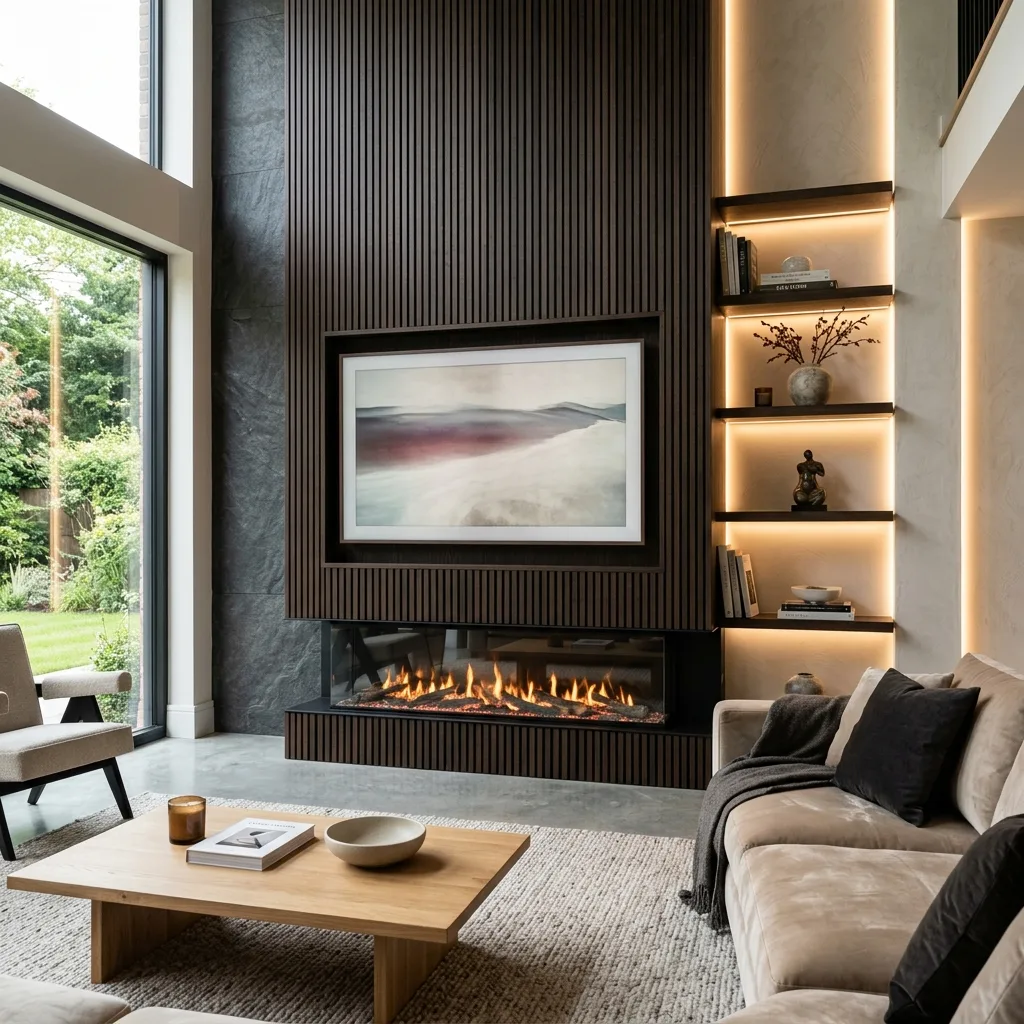
A media wall isn't just a carpentry job. Done properly, it needs stud work and boarding, a safe fused spur for the fire, hidden cabling for the TV and sound system, and a plastered, decorated finish that looks like it was always part of the room.
Because All Aspects is a full construction firm, one team handles all of it — the bespoke joinery, the certified electrics, and the making good. No juggling three different trades, no gaps between them, and one point of contact from design to the day you switch the fire on.
Media walls are one of the most popular finishing touches on our house renovations and extensions — but we're just as happy building one as a standalone job.
We frame and recess modern electric fires to manufacturer clearances, with the fused spur installed and certified by our own electricians — not left for you to arrange separately.
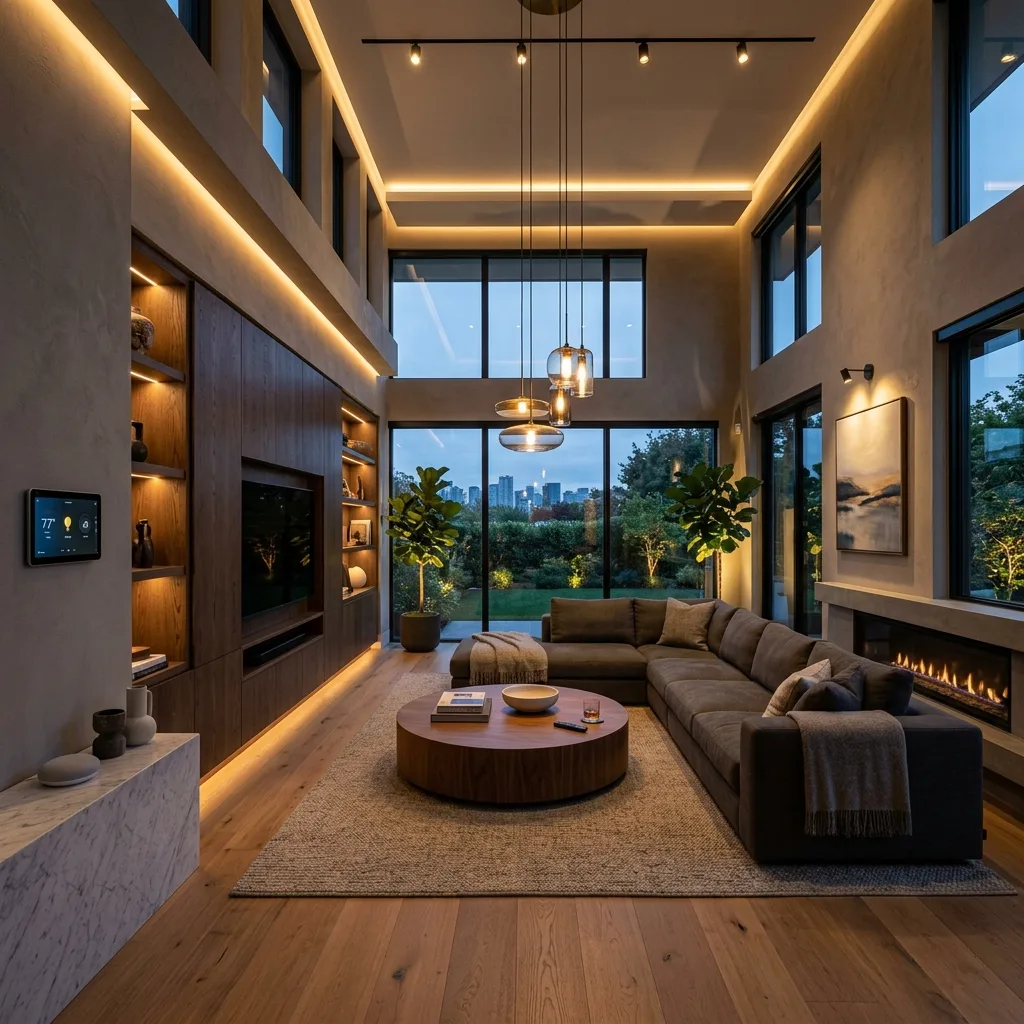
TV, soundbar and console cables are chased and routed inside the wall during the build, with recessed sockets placed exactly where your equipment sits. No trunking, no trailing wires.
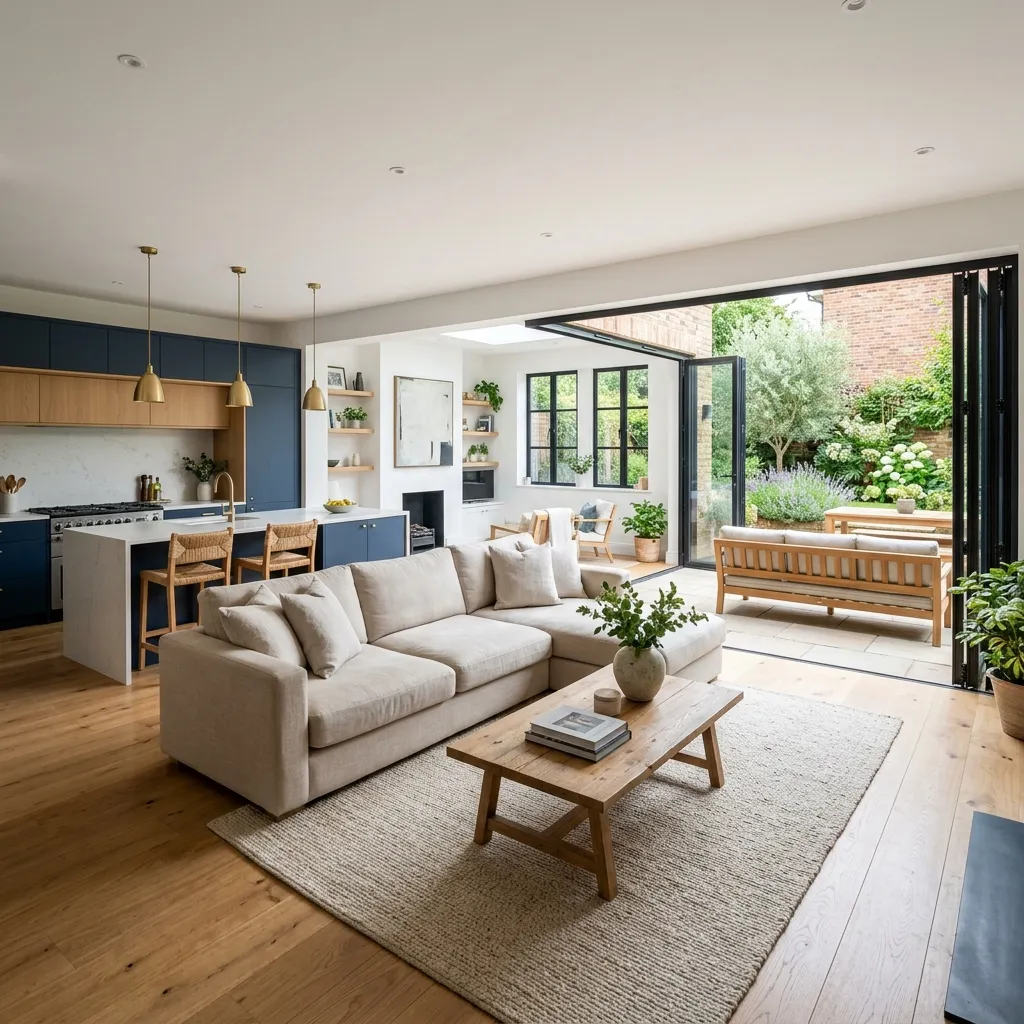
Shelving, cupboards and panelling built to your room's exact dimensions, then plastered, painted and decorated by us — so the wall is genuinely finished when we leave.
A media wall is three trades pretending to be one piece of furniture: joinery, electrics and often a heat source, all landing on the same square metre of wall. Nearly every media wall that fails does so for one of three reasons, and none of them is the finish.
A large television on a cantilever bracket puts a serious leverage load into whatever is behind the plasterboard. On a modern stud wall that means hitting timber, not the board. On a period Penarth or Barry house it often means dot-and-dab plasterboard over masonry — and a fixing that grips only the board and the adhesive dab has almost nothing holding it. That is the classic failure, and it usually shows up months later.
The fix is not a longer screw. It is knowing the substrate before you design the layout, and building a proper backing structure into the wall where the bracket lands.
This is the part homeowners never see and the part that matters most, because a media wall involves driving heavy fixings blind into a wall somebody else wired.
A television bracket is a heavy fixing driven blind into a wall you did not wire. This is the part of a media wall that is worth paying somebody to get right.
Under BS 7671, a cable concealed less than 50mm deep may only run in a prescribed zone — horizontally and vertically in line with an accessory, within 150mm of the top of the wall, or within 150mm of an internal corner — and needs 30mA RCD protection as well. That tells you where a cable is permitted. On an older house that has been rewired by three different people it does not tell you where the cables actually are, which is why we detect rather than assume.
An electric fire set into joinery has manufacturer clearances to combustible materials, and those are not advisory. AV equipment shut into a sealed cabinet cooks itself — amplifiers and set-top boxes need a ventilation path, and designing one in at the carcass stage costs nothing while retrofitting it means cutting up finished work.
Within reason, but the bracket and the backing structure have to be designed for the specific weight and the cantilever load, and that is decided before the carcass is built. The common failure is a heavy screen fixed into dot-and-dab plasterboard, where the fixing is only really gripping the board and the adhesive.
Usually some routing is needed to get power and HDMI to the screen position without a visible trunking run. Concealed cables less than 50mm deep have to sit in the prescribed zones set out in BS 7671 and be protected by a 30mA RCD. On an older property we detect existing cable runs before cutting anything.
Yes, and it is one of the most popular elements. The design has to respect the manufacturer’s clearances to combustible materials, and the surrounding joinery is specified around that rather than the other way round.
Not if a ventilation path is designed in at carcass stage. Amplifiers, consoles and set-top boxes all need airflow; sealing them into a cupboard shortens their life considerably.