



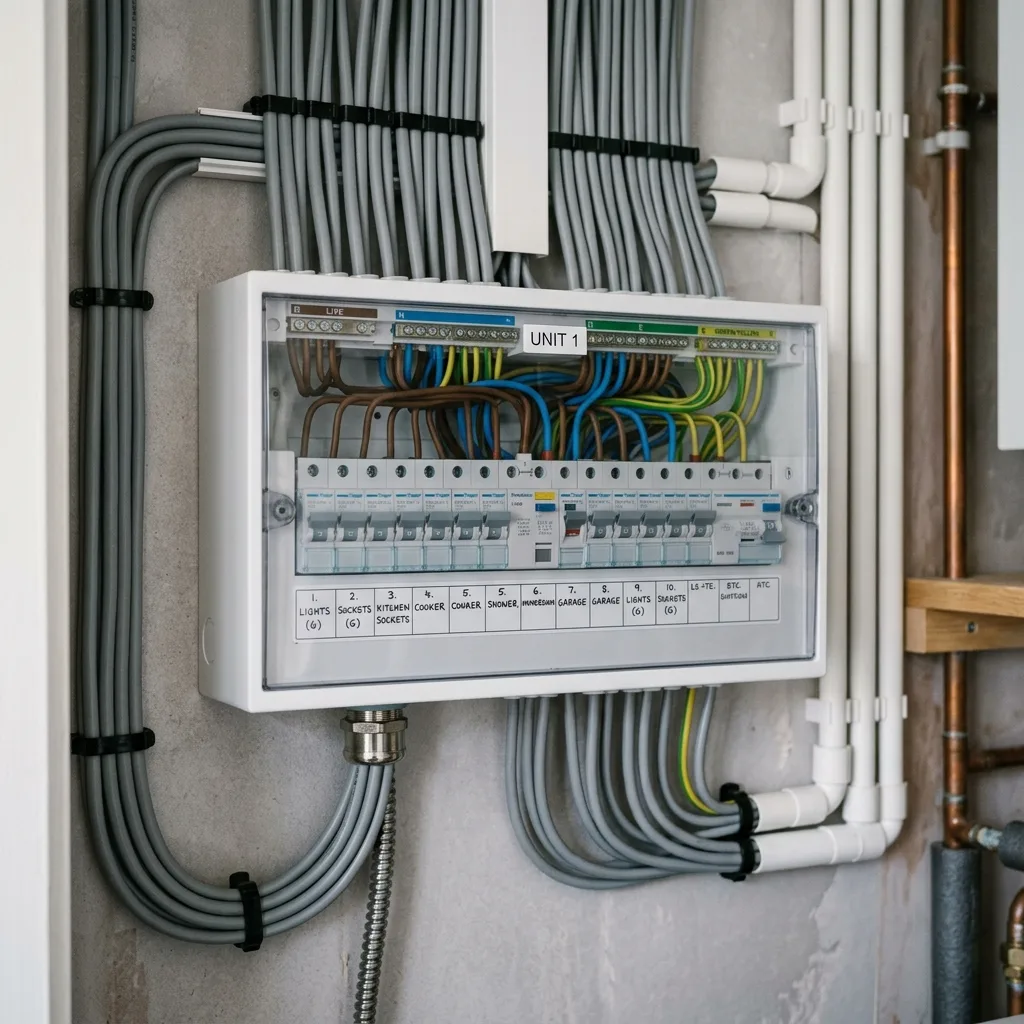
Comprehensive rewiring for older properties or new extensions, ensuring total compliance with the latest safety regulations.
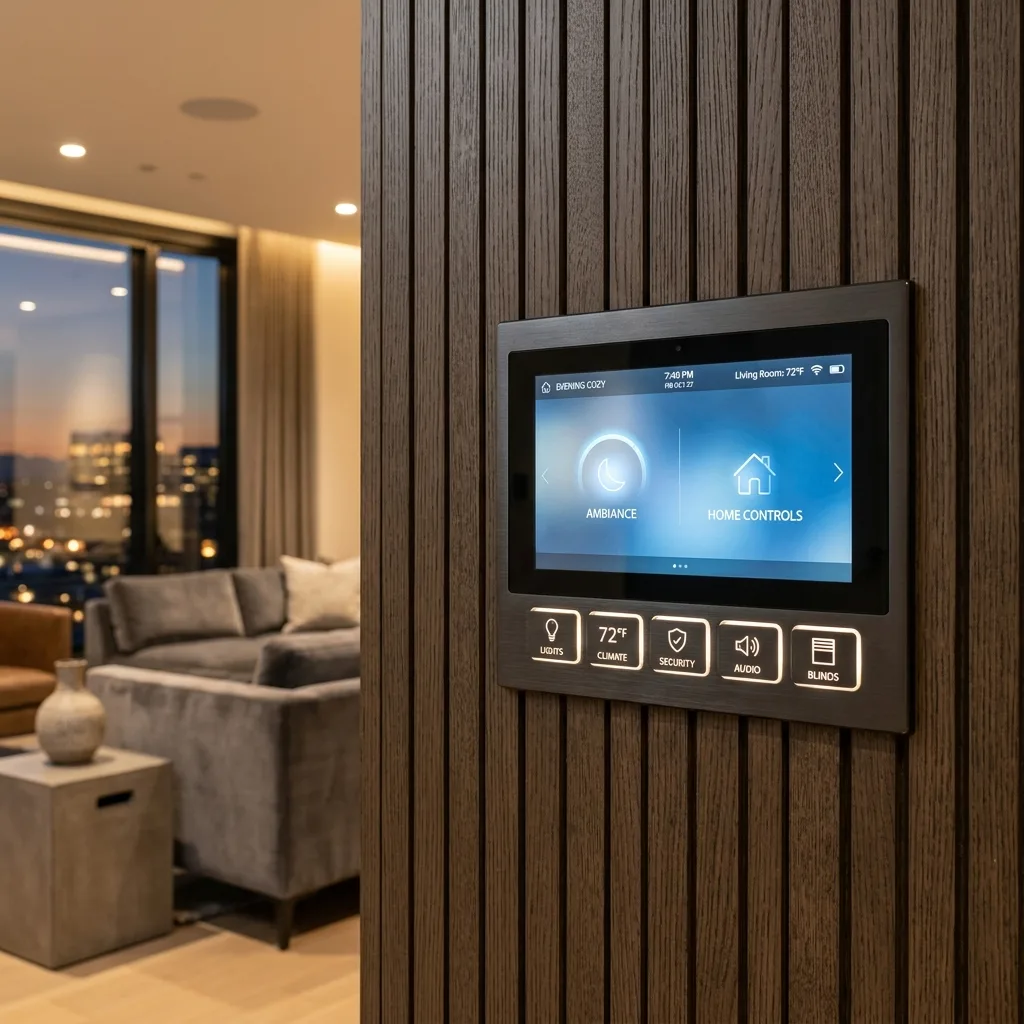
Upgrade your property with state-of-the-art smart lighting, security, and climate control systems that you can manage from your phone.
From bespoke kitchen spotlights to elegant architectural lighting and consumer unit upgrades, we handle all installations efficiently.
Total power loss? Tripping fuse box? Dangerous wiring? Our emergency electricians are on standby 24 hours a day, 7 days a week to handle critical electrical issues across Cardiff and Caerphilly. We guarantee a fast response to keep your property safe and powered.
Electrical work in a dwelling is covered by Part P of the Building Regulations, which was introduced across England and Wales in January 2005 and applies to houses, flats and residential parts of buildings including HMOs.
There are two routes to compliance. Either the work is done by an electrician registered with a competent person self-certification scheme, who certifies it and arranges the building regulations notification through their scheme; or it goes through local authority building control, who inspect it directly. The first route is faster and cheaper, which is why it is the one most households want.
A television bracket is a heavy fixing driven blind into a wall you did not wire. This is the part of a media wall that is worth paying somebody to get right.
Beyond notification, the day-to-day rule that governs how a house gets wired is BS 7671. A cable concealed in a wall at less than 50mm depth must run in a prescribed zone — in line horizontally or vertically with an accessory, within 150mm of the top of the wall, or within 150mm of an internal corner — and needs 30mA RCD protection. Walls with a metal frame or metal noggins bring their own requirements regardless of depth.
On an extension or a renovation, first fix has to happen before plastering and second fix after decoration — which means the electrical programme constrains everything around it. Having the electricians in-house is mainly a scheduling advantage: nobody is waiting a fortnight for a subcontractor to come back and put the sockets on.
No. Notification is required where the work is major — involving one or more complete new circuits — or where it falls within a special location, unless it is carried out by an electrician registered with an authorised competent person self-certification scheme, who notifies through the scheme instead.
Part P applies in both, but the Welsh Building Regulations were amended on 31 July 2014 and have diverged from the English regulations since. That means English online guidance should not be relied on for a Welsh property — check with Welsh building control or a registered electrician working in Wales.
Prescribed areas of a wall where a shallow concealed cable is permitted to run: horizontally and vertically in line with an accessory such as a socket or switch, within 150mm of the top of the wall, and within 150mm of an internal corner. Below 50mm depth those cables also need 30mA RCD protection. The zones describe where a cable may be, not where one necessarily is.